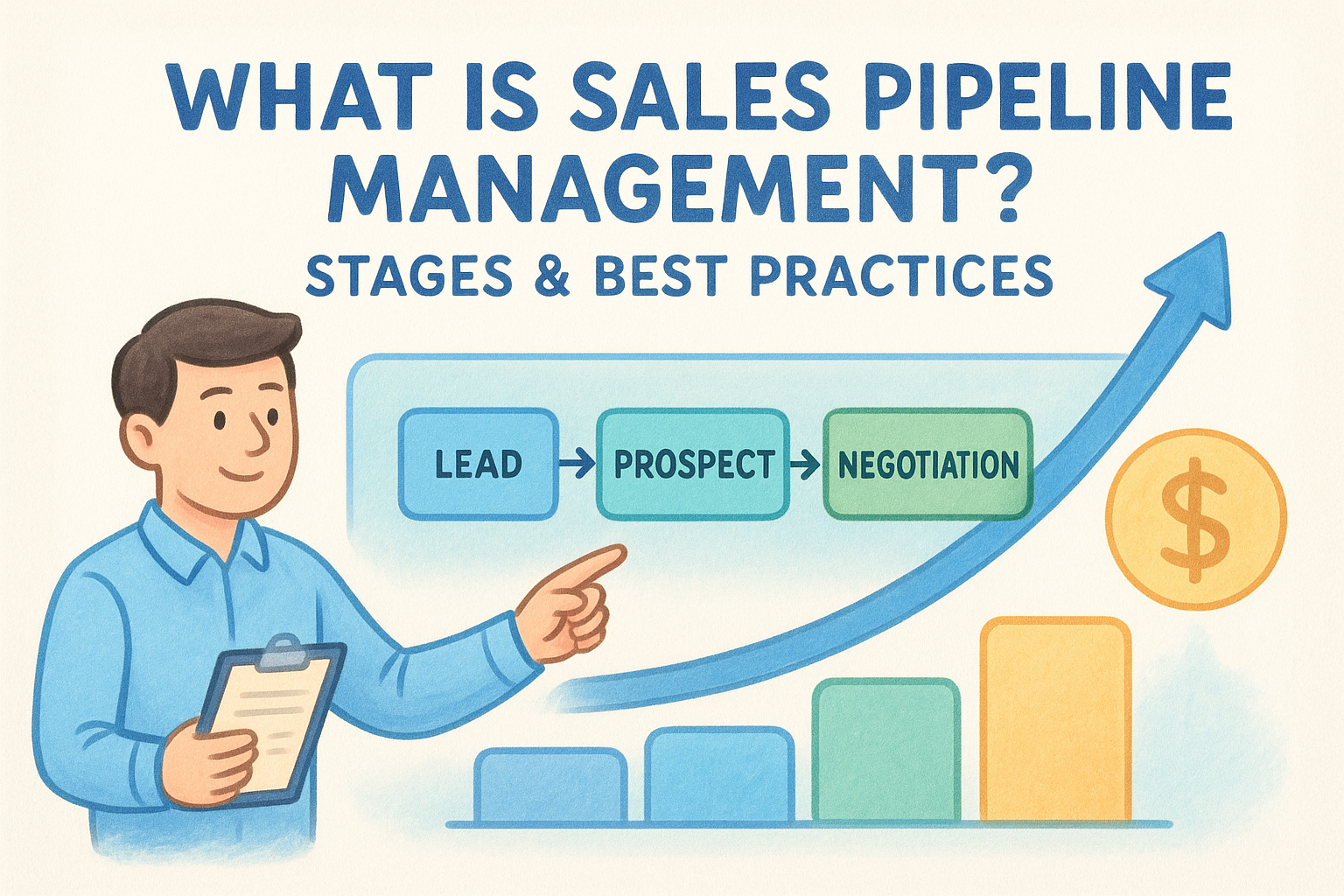
A well-managed pipeline isn't just a nice-to-have, it's the difference between hitting your sales targets and constantly wondering why deals stall. It tells you how much revenue is in play, which stages leak the most prospects, and where your reps should focus their energy. Without it, you're essentially running your sales process blind.
This guide breaks down the core stages of a sales pipeline, explains how each one works, and walks you through proven best practices to keep deals moving forward. Whether you're building your first pipeline or tightening up an existing one, we'll cover what actually matters, including how tools like Vedain CRM make pipeline tracking straightforward with features like visual Kanban boards, automation workflows, and built-in reporting at a flat $10/user/month.
Why sales pipeline management matters
Most sales teams don't lose deals because their product is bad or their pricing is off. They lose them because follow-ups fall through the cracks, deals sit in one stage too long, and no one has a clear picture of where everything stands. Understanding what is sales pipeline management, and actually practicing it, gives your team the visibility and structure needed to fix those gaps before they cost you real revenue. Without that foundation, you're essentially running on memory and hope, which rarely holds up under pressure.
You can forecast revenue with confidence
When your pipeline is organized and up to date, forecasting stops being a guessing game. You know exactly how many deals are in each stage, what each deal is worth, and roughly how long a typical deal takes to close based on historical patterns. That information lets you project next month's or next quarter's revenue with meaningful accuracy, which matters both for sales leadership setting targets and for finance teams planning headcount or spend.
A pipeline with clean data and consistent stage definitions gives you a reliable revenue forecast, not just a rough estimate built on gut feel.
Without that structure, managers build forecasts from memory, incomplete notes, or outdated spreadsheets. Inaccurate forecasts cause businesses to overhire, understaff, or miss cash flow needs entirely, which creates problems well beyond just missing a quota number.
You can spot where deals get stuck
Every pipeline has at least one stage where deals tend to stall. Maybe prospects regularly go quiet after a demo, or opportunities that reach the proposal stage drag on for weeks without a decision. Pipeline management makes those patterns visible, so you can address them rather than repeating the same mistakes quarter after quarter across your entire team.
Tracking exit criteria, meaning the specific actions or signals a deal must meet before advancing to the next stage, creates a consistent standard your reps follow. Inconsistent stage definitions are one of the biggest reasons pipeline data becomes unreliable. When two reps use the same label to mean different things, any report you pull from that pipeline is essentially meaningless for decision-making.
You hold your team accountable without constant check-ins
A well-maintained pipeline gives managers a way to coach and redirect reps based on actual data rather than opinion or self-reporting. If a rep has 25 deals sitting in the proposal stage for more than 60 days, that's a clear, data-backed conversation starter. You're not guessing or relying on what a rep tells you in a one-on-one; the pipeline shows you what's actually happening.
This also helps reps themselves work smarter. Rather than treating every lead with equal urgency, they can focus their energy on deals most likely to close in the current period, follow up on ones at risk of going cold, and deprioritize long-shot opportunities that consume time without realistic return. That kind of focused prioritization compounds over time: reps who work a clean pipeline consistently outperform those who chase every opportunity with the same effort, simply because they know where to spend their hours.
Sales pipeline vs sales process vs funnel
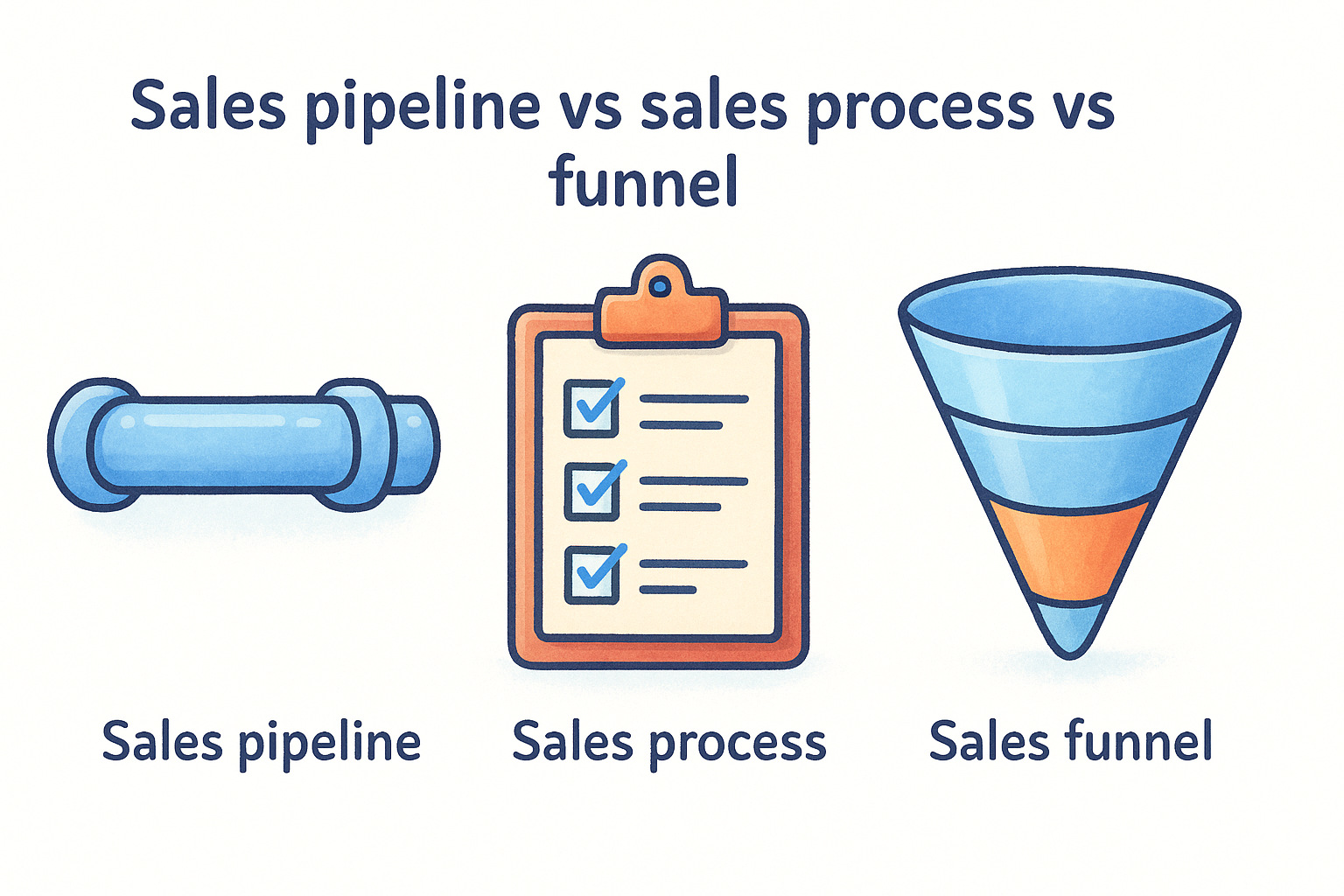
These three terms get used interchangeably all the time, but they describe different things with different purposes. Mixing them up leads to real confusion when you're designing your sales system or trying to understand what is sales pipeline management versus everything else. Knowing where each concept begins and ends helps you use each one correctly and build a sales operation that actually works.
The sales process
Your sales process is the repeatable set of steps your team follows to move a prospect from first contact to a closed deal. Think of it as the playbook: it defines what actions reps should take at each point, such as the specific questions to ask during discovery, the materials to share after a demo, or how to handle a pricing objection. The process is method-focused and describes how your team sells, not where a specific deal currently stands.
The pipeline, by contrast, tracks the live status of every active deal at any given moment. It's the operational view of reality. Your sales process is the strategy; the pipeline is where that strategy plays out in real time across all your current opportunities.
The sales funnel
The sales funnel takes a broader, demand-generation view. It maps the entire buyer journey from the moment someone becomes aware of your product, through consideration, and finally to a purchase decision. Funnels typically measure volume and drop-off rates at each stage, which makes them useful for understanding how many people move from, say, visiting your website to booking a sales call.
The funnel answers "how many people are moving through our marketing and sales efforts?" while the pipeline answers "where exactly does each deal stand right now?"
Here's a quick breakdown of how each concept differs:
Keeping these three concepts separate helps each team measure what they actually control and avoid building reports that mix up signals from completely different parts of your revenue operation.
Sales pipeline stages and exit criteria
One of the most common points of confusion when learning what is sales pipeline management is the assumption that every team should use the same set of stages. Your stages should reflect how your buyers actually make decisions, not a generic template copied from a blog post. That said, most B2B sales pipelines share a core structure you can adapt to fit your specific sales cycle, deal complexity, and average contract size.
Poorly defined stages are the fastest way to turn pipeline data into noise - if reps interpret the same stage differently, no report you pull will tell you anything reliable.
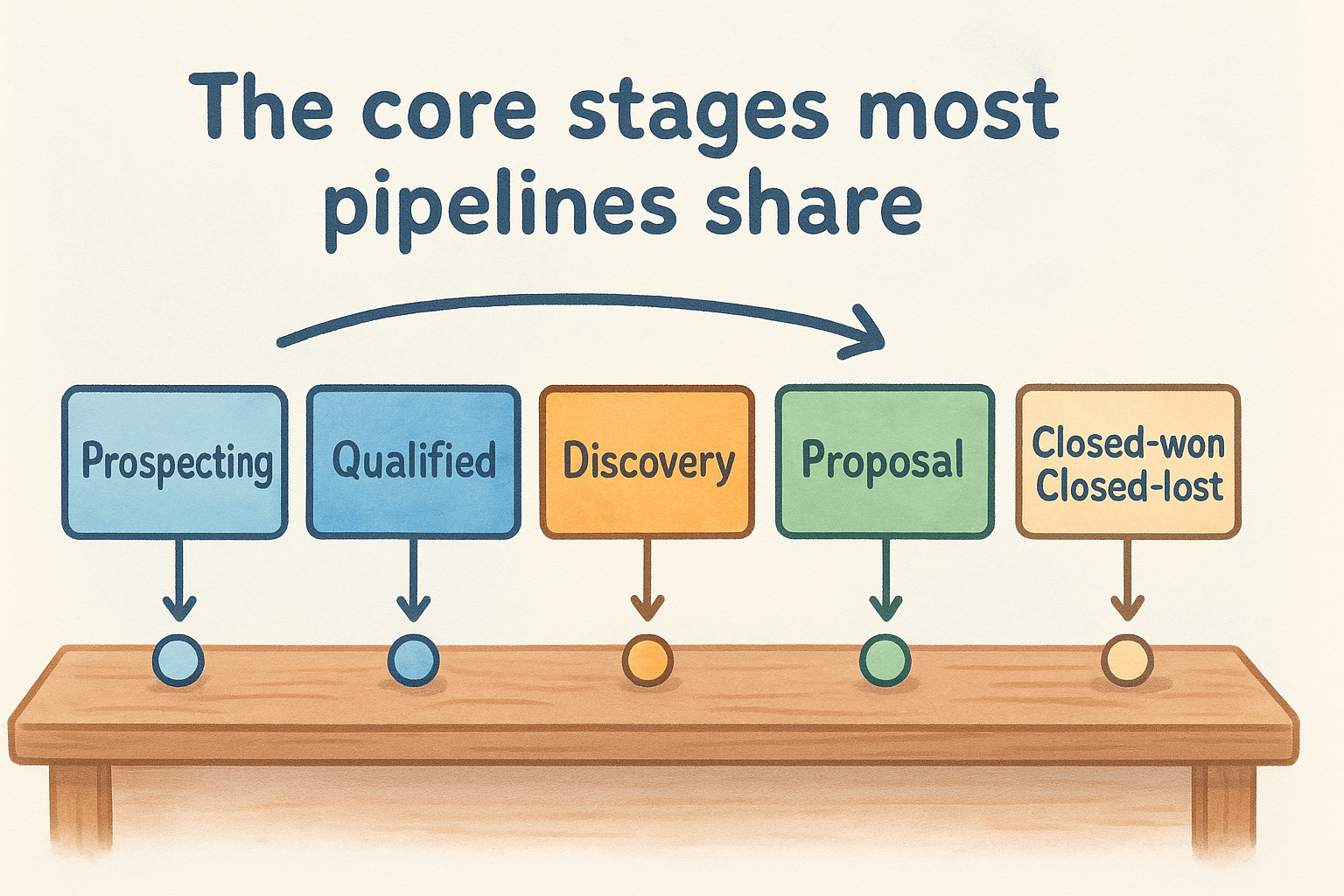
The core stages most pipelines share
Most sales pipelines move through five to seven stages. The table below shows a structure that works for the majority of sales teams, along with what each stage means and what a rep needs to confirm before moving a deal forward.
Why exit criteria matter more than stage names
Exit criteria are the specific conditions a deal must meet before your rep advances it to the next stage. Without them, reps move deals forward based on optimism rather than evidence, which inflates your pipeline and makes forecasting unreliable. A deal that "feels close" is not the same as one where the prospect has confirmed budget and scheduled a final review call.
Set your exit criteria as observable actions or confirmed facts rather than assumptions. For example, "prospect expressed interest" is vague. "Prospect confirmed the decision-maker is involved and agreed to a demo date" is something any rep can objectively verify, which keeps your pipeline data clean and your forecasts grounded in reality.
Key pipeline metrics and how to read them
Tracking where deals stand is only part of what is sales pipeline management. The other part is measuring how well your pipeline performs over time. Without specific metrics, you can't tell whether a struggling quarter came from bad leads, slow follow-up, or a pricing mismatch. The right numbers make those distinctions clear and point you toward specific corrective actions rather than vague fixes.
Win rate
Your win rate is the percentage of deals you close compared to all deals that reached a decision, calculated by dividing closed-won deals by the total of won plus lost in a given period. A dropping win rate often signals a qualification problem: your team is letting too many weak deals into the pipeline and spending rep hours on opportunities that were never realistic fits.
If your win rate drops but deal volume stays flat, the problem usually lives at the qualification stage, not the close.
Review your win rate by rep, deal size, and lead source separately. Patterns across those cuts often reveal whether the issue is a coaching gap, a specific segment performing poorly, or a sourcing problem that starts long before a deal ever reaches your pipeline.
Average deal size and sales cycle length
Average deal size tells you how much revenue a typical closed deal brings in. Track it alongside sales cycle length, which measures how many days a deal takes to move from qualified to closed-won. Together, these two numbers directly shape your revenue forecast and how deep your pipeline needs to be to hit a given target.
Watch both metrics for directional trends. A rising average deal size is usually a positive sign, but if cycle length grows at the same rate, your team may be overextending on large enterprise deals at the expense of faster, smaller wins that keep the quarter stable.
Pipeline velocity
Pipeline velocity combines deal volume, win rate, average deal size, and cycle length into a single number that shows how fast revenue moves through your pipeline. The formula is: (Number of opportunities × Win rate × Average deal size) ÷ Average sales cycle in days. Use it to compare performance across periods or between teams.
When velocity drops, check each component individually rather than assuming the entire process is broken. A dip in win rate requires a different fix than a lengthening sales cycle, and confusing the two leads to changes that solve the wrong problem entirely.
How to manage a pipeline week to week
Understanding what is sales pipeline management is one thing; maintaining it consistently week after week is where most teams actually struggle. A weekly pipeline review is the practice that separates teams with clean, reliable data from those drowning in stale deals and inflated forecasts. The goal isn't to spend hours in meetings; it's to build a short, repeatable rhythm that keeps your pipeline accurate and your reps focused on the right deals rather than the most recent ones.
Run a focused weekly review
Set aside 30 to 45 minutes each week to review every active deal with your team. During this session, focus specifically on three things: deals that haven't advanced in the past seven days, deals expected to close within the current period, and any new deals added since your last review. Skipping this practice even once lets stale opportunities pile up quickly, which corrupts your forecast data and makes coaching conversations far less useful.
A short, consistent weekly review does more for pipeline health than any quarterly deep-dive ever will.
Use a standard set of questions for every deal you touch during the review:
- •What is the next concrete action, and who owns it?
- •Has the prospect confirmed they're still actively evaluating?
- •Does the close date reflect reality, or does it need updating?
- •Are there blockers your rep needs help clearing?
Keep your data current between reviews
Your weekly review only works if reps log their activity throughout the week, not just before the meeting. When deal notes, email touches, and stage updates are entered in real time, your pipeline reflects actual reality. When reps batch-update everything the night before a review, you're looking at a cleaned-up version of events rather than the pipeline itself.
Deal data should be updated within 24 hours of any significant interaction, whether that's a demo, a pricing conversation, or a prospect going quiet after follow-up. Building that habit takes deliberate reinforcement early on, but once it's standard practice, your weekly reviews become faster and far more useful for identifying which deals need immediate attention versus which ones are tracking on schedule without intervention.
Common pipeline problems and fixes
Even teams that understand what is sales pipeline management run into the same recurring issues. Stale deals, poorly qualified opportunities, and inconsistent data entry are the three problems that damage pipeline health most reliably. Each one has a practical fix once you know where to look and what signals to watch.
A pipeline bloated with stale deals
When reps avoid marking deals as lost, your pipeline fills up with opportunities that haven't moved in weeks or months. Bloated pipelines create a false sense of security because the total deal value looks healthy on paper while your actual closeable forecast is significantly weaker underneath it. Set a firm inactivity threshold, typically 30 days without meaningful buyer engagement, and treat any deal that crosses it as a mandatory review item during your weekly session.
- •Define "meaningful engagement" clearly: a reply, a scheduled call, or a confirmed next step
- •Review stale deals weekly and either re-engage them or disqualify with a logged reason
- •Track loss reasons over time so patterns across your pipeline become visible and actionable
Deals advancing on optimism, not evidence
The second major problem connects directly to exit criteria. Reps who move deals forward based on enthusiasm rather than confirmed buyer actions inflate every stage of your pipeline and make your forecast unreliable within a single quarter. A prospect who says "this looks interesting" has not committed to anything, and treating that signal like a qualified advance wastes rep hours on deals that were never as close as they appeared.
The fix isn't more process, it's clearer standards: every stage advance requires at least one confirmed buyer action, not just a positive tone on a call.
Revisit your exit criteria with your team quarterly to make sure they still reflect how your buyers actually behave. As your market shifts or deal complexity grows, the signals that genuinely indicate progress will shift with them.
Inconsistent rep activity logging
Your pipeline data is only as reliable as what reps actually enter. When some reps log calls and emails daily while others batch-update once a week, your reports reflect habits rather than deal reality. Address this by setting a clear 24-hour logging standard and reviewing compliance during your weekly review, not during a quarterly audit after the damage is already done.
Logging consistency is a cultural standard, not a technical one. Make it part of how you onboard new reps, reinforce it during coaching conversations, and tie it directly to the quality of your pipeline data in team discussions.
Next steps
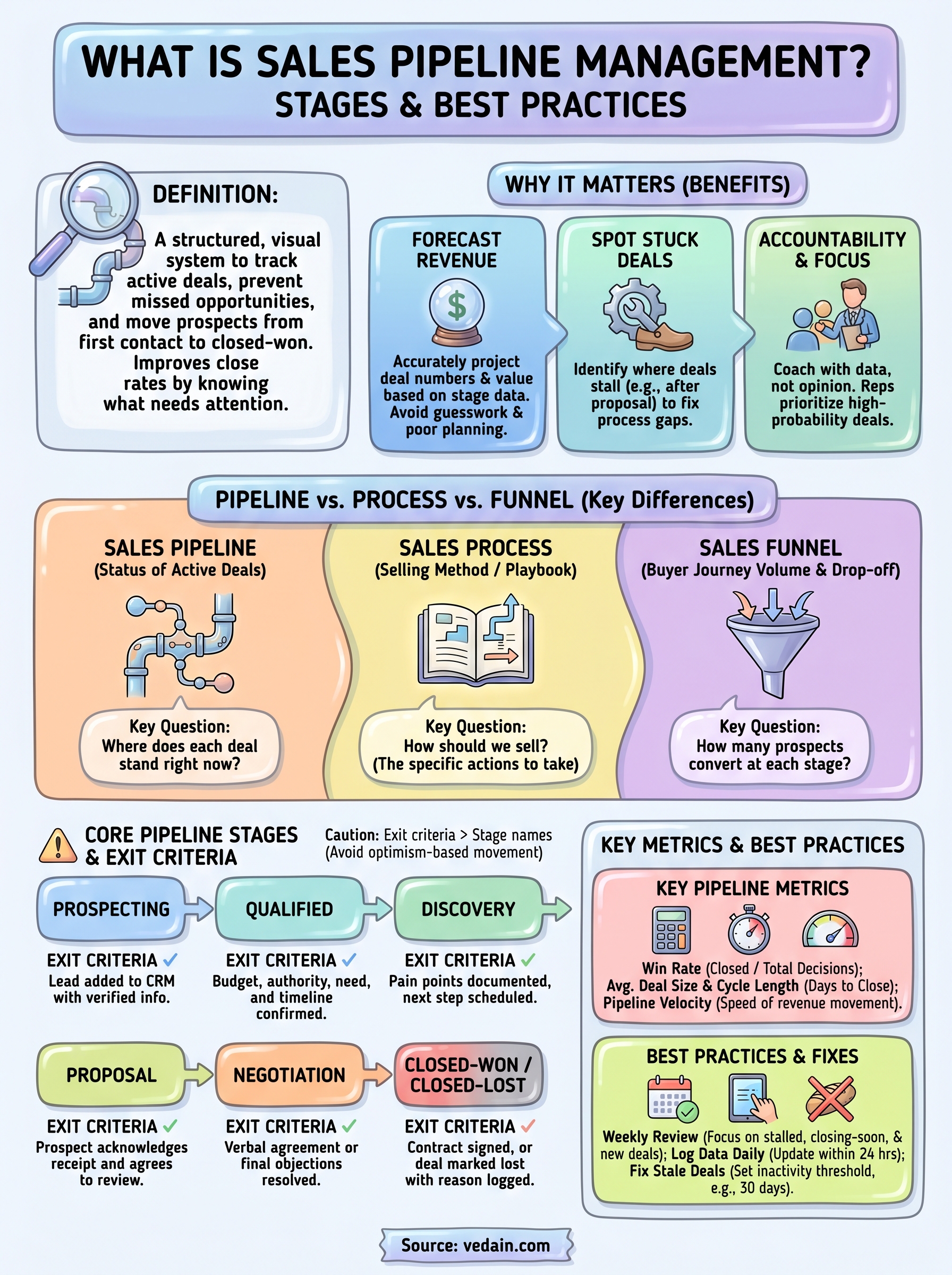
Now you have a clear picture of what is sales pipeline management: it's the system that turns scattered deals into a structured, measurable process your team can rely on every week. The stages give your reps a shared language. The exit criteria keep your data honest. The metrics tell you where to focus and what to fix before small problems compound into a missed quarter.
Start by auditing your current pipeline. Look for stale deals past your inactivity threshold, stages without clear exit criteria, and any gaps in how your reps log activity. Small, consistent improvements to those three areas will produce better forecasting, fewer dropped opportunities, and more predictable revenue over time.
If you want a tool built to support all of this without the enterprise price tag, try Vedain CRM free. You get visual pipeline management, workflow automation, and built-in reporting at $10 per user per month, with no feature gates.